Dining
Main dining rooms, buffets and casual spots are included. Specialty restaurants cost extra and are worth booking ahead. Disney rotates you through three themed restaurants with the same servers.
NEW TO CRUISING? WELCOME!
Documents, packing, embarkation day, life on board and what happens when you get home. Everything we wish someone had told us before our first sailing.
FROM BOOKING TO BACK HOME
Pick the ship, dates and stateroom, and decide on add-ons like drink packages or Wi-Fi. Consider travel insurance now so cancellation coverage starts early.
Make sure everyone has a passport, or a birth certificate plus photo ID for closed-loop cruises. Passports can take a while, so start early.
Specialty dining, shore excursions and spa times open in each line’s app or planner before sailing. Popular times go fast.
Complete online check-in in the cruise line’s app, add your photo and documents, and pick an arrival time.
Drop bags at the curb, clear security, board with your app pass, then enjoy lunch and your first afternoon at sea.
Complete the safety briefing, check the daily schedule in the app and make dinner plans.
Bags usually go out the night before (or carry your own off). Keep documents and medications with you.
You’ll clear U.S. Customs at the terminal, then head home already dreaming of the next one.
DOCUMENTS
For U.S. citizens on a closed-loop cruise (one that starts and ends at the same U.S. port, like Port Canaveral), U.S. Customs and Border Protection accepts a birth certificate plus a government-issued photo ID. Children under 16 need only proof of citizenship, such as a birth certificate.
The U.S. State Department still recommends a passport book. If you ever need to fly home from another country (a medical emergency or a missed ship), you’ll need one.
Flying to Orlando? Since May 7, 2025, TSA requires REAL ID-compliant identification (or a passport) for adults at airport security.
TICK IT OFF
Your ticks are saved in this browser on this device only.
LEAVE THESE AT HOME
Every cruise line bans clothing irons and garment steamers (ships have laundry facilities). Power strips are where they differ:
DRINKS YOU CAN BRING
| Cruise line | Policy |
|---|---|
| Royal Caribbean | One sealed 750 ml bottle of wine or champagne per guest of drinking age on embarkation day. No beer or hard liquor. Up to 12 standard cans or cartons of non-alcoholic drinks per stateroom. |
| Disney Cruise Line | Each guest 21+ may bring one unopened bottle of wine or champagne (750 ml max) or six beers (12 oz max), hand-carried at the start of the voyage. No spirits. |
| Carnival | Guests 21+ may bring one sealed 750 ml bottle of wine or champagne in their carry-on on embarkation day. No beer or hard liquor. A corkage fee applies in dining rooms and bars. |
LIFE ON BOARD
Main dining rooms, buffets and casual spots are included. Specialty restaurants cost extra and are worth booking ahead. Disney rotates you through three themed restaurants with the same servers.
Every line runs a required safety briefing on day one: usually a video in the app plus a quick check-in at your muster station. Disney asks everyone to report in person at the scheduled time.
Sea days are for pools, spas and shows. Port days are for exploring. A 3-night Bahamas trip may have no sea days, while a 7-night sailing often has two or three.
At some ports the ship anchors offshore and small boats (tenders) carry you to land. Rides take a few minutes and depend on the weather. Ship excursions usually go first.
Wi-Fi packages cost extra on most lines. Disney and Royal Caribbean let you use their apps on ship Wi-Fi for free, so schedules and messages are easy.
The CDC notes Medicare generally doesn’t cover care outside the U.S. or medical evacuation. Compare cancellation, medical and evacuation coverage before you sail.
MONEY ON BOARD
Cruise ships are cashless. Your key card links to an onboard account, and you settle up with a card at the end. Daily gratuities for stateroom and dining teams are added automatically unless you prepay.
| Cruise line | How gratuities work |
|---|---|
| Royal Caribbean | Added daily per guest (higher for suites) unless prepaid. A 20% gratuity is added to drinks, specialty dining, spa and room service purchases. Current rates ↗ |
| Disney Cruise Line | Not included in the fare. Gratuities for stateroom and dining teams can be prepaid or are added to your onboard account. |
| Carnival | Added daily per person (higher for suites) unless prepaid; adjustable on board. Current rates ↗ |
SPEAK FLUENT CRUISE
Boarding day: the start of your cruise.
The morning you leave the ship at the end.
Your assigned meeting point in an emergency, covered in the safety briefing.
A full day on the ship with no port stop.
A small boat that ferries guests to shore when the ship anchors offshore.
Left and right sides of the ship when facing forward.
The front and back of the ship.
A cruise that begins and ends at the same U.S. port.
The included sit-down restaurant, often called the MDR.
The time you must be back on the ship on port days. They won’t wait!
QUESTIONS
Not always. U.S. citizens on closed-loop cruises can use a birth certificate plus photo ID, but the State Department recommends a passport in case you need to fly home from another country.
Big modern ships are very stable, and many guests feel nothing. If you’re prone to motion sickness, pack remedies and ask your doctor before you go.
Your stateroom, main dining, many casual restaurants, pools, kids’ clubs and most entertainment. Specialty dining, alcohol, Wi-Fi, spa, excursions and gratuities usually cost extra. See each cruise line page for details.
Yes, with limits. Royal Caribbean and Carnival allow one 750 ml bottle per adult; Disney allows one bottle of wine or six beers per adult 21+.
Surge protectors and some power strips are fire risks on ships. Royal Caribbean and Disney ban power strips; Carnival allows strips without surge protection.
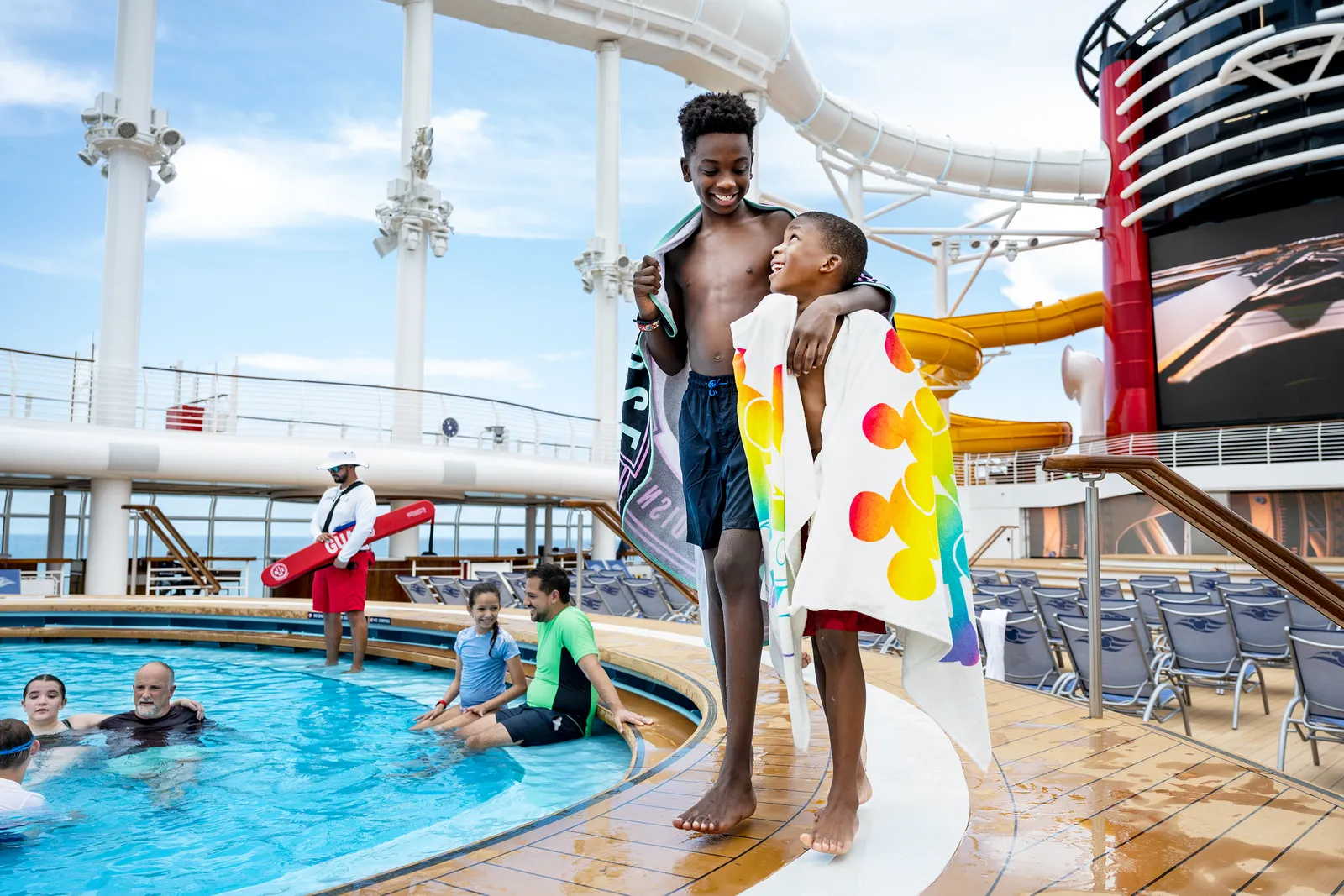
Summarized from CBP (closed-loop cruises), U.S. State Department, TSA REAL ID, TSA liquids rule, Royal Caribbean prohibited items, Royal Caribbean food & drink policy, Disney Cruise Line terms, Carnival FAQ, CDC Yellow Book, Celebrity Cruises (tendering). Reviewed October 2026. Hero photo: courtesy of Disney Cruise Line. Rules change; check your cruise line’s current policies before you sail.
READY FOR YOUR FIRST SAILING?